Renaissance-painted red-haired woman in a deep crimson velvet dress, seated to the right with a halftone-illustrated laptop on her lap, framed by faint linograph arcs and rays. The painted figure fades softly into a wide cream background that the text sits over

More capacity. Without more headcount.

We work with the people responsible for how a business actually runs. We find the workflows quietly eating your team's week, redesign them, and build the systems that make the new way stick. AI and automation are how, not why.

Founded by alumni from

University of OxfordUniversity of CambridgeUber

We are not tied to one AI vendor. We use whichever tool fits your job.

GoogleOpenAIMoonshot AIQwenMetaMistralNVIDIAGLMDeepSeekAI2IBMMicrosoftFalconCohereMiniMaxDatabricksSnowflakexAIStability AIGoogleOpenAIMoonshot AIQwenMetaMistralNVIDIAGLMDeepSeekAI2IBMMicrosoftFalconCohereMiniMaxDatabricksSnowflakexAIStability AI

The problem

Four things we hear in the first meeting.

None of them are technology problems. All of them are fixed with a mix of better process and the right amount of software.

How we solve them

What we actually do.

Six capabilities, one team. Each one is a real service, not a page in a deck. Where a better process is the answer, we say so. Where technology earns its place, we build it.

  1. Operational diagnosis

    We read the operation as it actually runs, not as the org chart says it does.

  2. Workflow redesign

    We redraw the workflows before touching a tool. Ownership, handovers, decisions.

  3. AI and automation implementation

    AI and automation applied only where they measurably remove friction. No pilots for their own sake.

  4. Systems integration

    We connect the tools you already own, so data reconciles once and reports run themselves.

  5. Change enablement

    New workflows only work when people trust them. We stay in the room until they do.

  6. Continuous improvement

    We measure, refine and evolve on a quarterly rhythm.

What changes

How we work

Start with one thing. Continue only if it earns it.

Three stages. Each is bought on its own terms, and each ends with a decision that is genuinely yours to make.

  1. Stage 01

    Audit

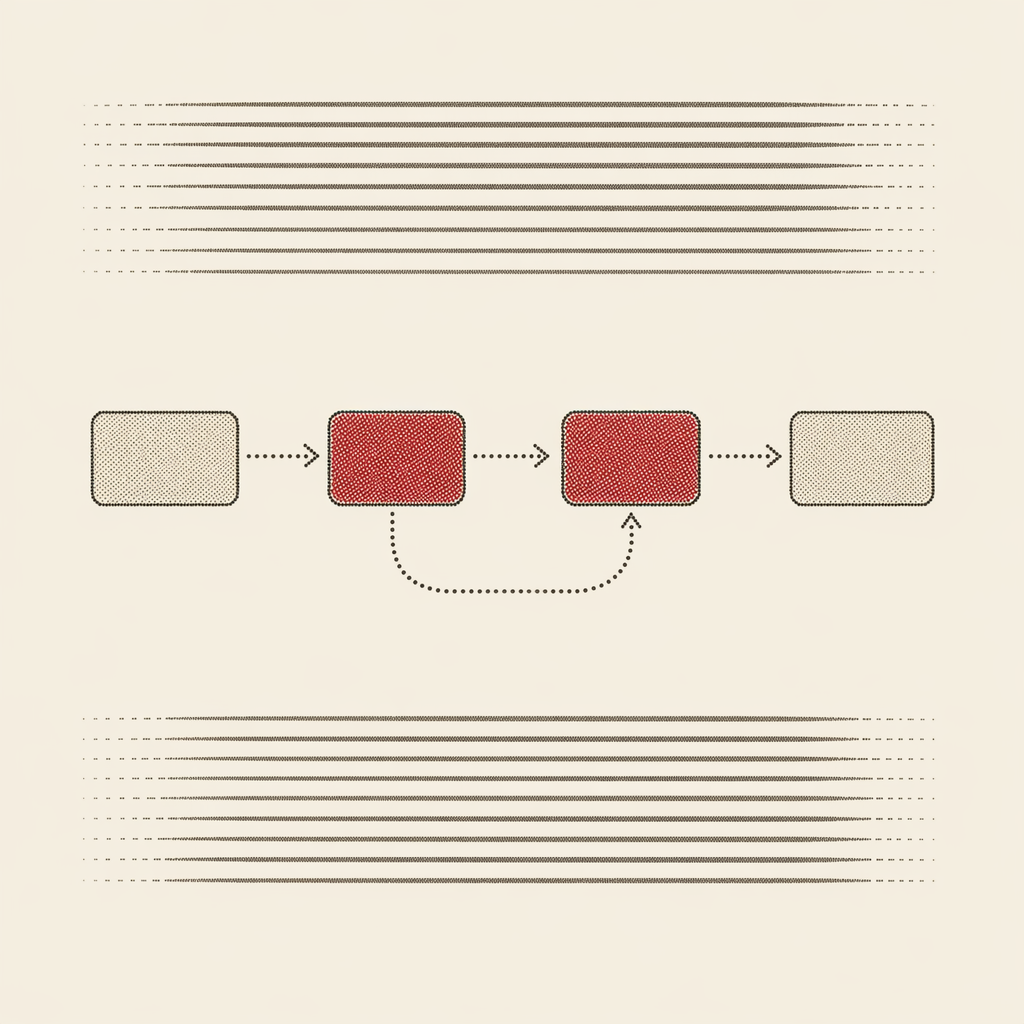
    A ninety-minute session with your team, then a written readout. How the work happens today, which workflows are costing you most, and which two are worth changing first.

    Fixed fee2 weeks

    No commitment beyond it

    • A mapping session with the people who do the work
    • A real sample of your work analysed, not a survey
    • A written readout ranking every workflow we find
    • Yours to act on, with us or without us
  2. Stage 03

    Run

    The next workflows, deeper connection into the systems you already own, and the data work that a proven result justifies.

    Retainerongoing

    Scoped to the work

    • More workflows on the same foundation
    • Connecting and cleaning the data behind them
    • Running on hardware you own, if your policy needs it
    • A named engineer who knows your setup

Each stage stands on its own. Value compounds if you continue, but stopping after the audit is a legitimate outcome. So is us telling you the honest answer is that we cannot help. There is no lock-in at any gate.

What we deliver

Practical business capabilities, built on what you already have.

We design and build practical business capabilities using AI, automation, data and the systems you already have.

Not sure what you need? That is where we start. The audit exists precisely for the case where you know something is not working but not yet what to do about it. Book a call

Renaissance-style oil painting: a monumental classical city floats on clouds in the upper sky, a grounded ochre cathedral with a carved wooden door anchors the right, and a robed crowd in the foreground holds up halftone-illustrated smartphones to photograph the scene

Automate the workflow, not the judgement.

The parts of your work that are repetitive, rule-shaped and re-keyed between systems should not need a person. The parts that need experience, relationship and judgement should never be handed to a model. Most tools blur that line. We draw it explicitly, in configuration you can read, and put a person on the other side of it.

Book a call

A conversation first. Promises later.

Tell us what is not working as well as it should. If there is something here for us, we will say what we would look at first. If there is not, we will say that too.